
End of summer and the markets are filled with fresh ripe fruits. To preserve the taste of summer, why not make a batch of jam from your favorite fruit? After all, what can be better in the dead of winter than a hot tea break with a warm toast smothered with your homemade summer jam?!
Jam is very simple to make. It is merely fruit boiled with sugar. However, there are secrets to making perfect jam:
- Balance between the acidity of the fruit, the natural setting agent pectin and the sugar
- Sugar content should have a minimum of 60% in order to prevent mold
- Boiling should be fast and reach jell point (220°F/105°C)
- Containers should be sterilized just before usage
- Storing in cool, dark, dry place will ensure your jam will last at least a year (assuming you don’t finish it first…)
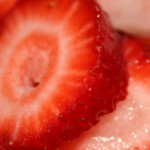
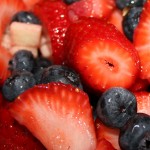
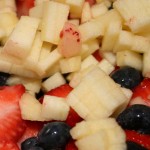
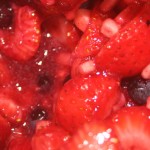
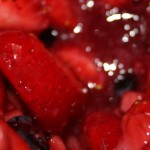
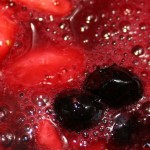
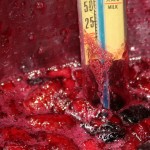
Acid fruits are best for jam, so try to find the “just about ripe” fruit because they contain most pectin, a natural setting agent. Favorites are tart apples, plums, apricots and currants. If using different fruits like strawberries, peaches, grapes or sweet cherries, make sure you add lemon juice for acidity and pectin for setting. You should use the juice from one lemon per 2-3lb of clean cut fruit. Pectin can be added in liquid or powdered form; a non commercial approach would be to use the juice from tart apples, or simply adding a finely grated tart apple for about 2lb of fruit. Prepare the fruit by washing it, removing coarse peel (apples and pears especially; I like leaving my peaches intact…) and cutting it. Leave small berries whole.
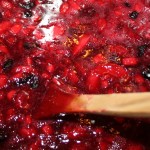
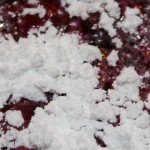
Cook the fruit with little water to avoid scorching over high heat in a wide preserving pan/pot with a capacity of about 18pt/10L. Jams should be boiled over a high heat so they cook as fast as possible and don’t lose color or flavor. Small batches, no bigger than 4lb/2kg of fruit, keep you “on target”. Once the cooked fruit soften, add at least 60% sugar, lemon juice and/or pectin to the fruit, and continue boiling over high heat. During boiling skim off all scum that rises to the surface. This will ensure a clear shiny jam.
Test for jell point with a candy thermometer. Make sure you do not rest the bulb on the bottom of the pot when testing, and continue boiling and skimming till you reach jell point. At this point, the jam should fall off the spatula in characteristic sugary drips. Another way to test for readiness is to pour some jam on a cold surface like granite or a saucer, wait a moment and see if it begins to set. If it is ready, a skin will form on the cooling jam surface.
Set aside for cooling for about 10 minutes. Transfer to sterilized containers with a big spoon or small ladle, 1/8” / 3mm off the top. Seal the jars with screw tops or rubber gaskets, depending on the jars you use. I sterilize my containers by first washing them with detergent and hot water, then boiling them in water for at least 10 minutes, and then air drying them over a rack. If using rubber gaskets, sterilize them by covering them in boiling water, but do not boil them as they will ruin. Mark the containers properly, like “Strawberry and Blueberry Jam, September 2008”, and store in a cool, dark and dry place. Once opened, store in the refrigerator.
Check our gallery section for more step by step images.
Discover more from Palette Dome Cuisine
Subscribe to get the latest posts sent to your email.


You must be logged in to post a comment.